Saying Goodbye to Liege

IMG_0030
I’ve been saying goodbye to Liege today.

I had soup with a good friend, and we talked about the changes going on in our lives; It’s good to be on a parallel journey with someone. She’s leaving for Brussels, I’m leaving for the US, but we’ll be connected wherever we go, fellow travelers and seekers after the life we know we were meant to live.

Telling myself that I don’t want to see the inside of any more department stores, I took the river road home, avoiding the shops, and saw the sun glistening on the Meuse, the tree-lined park, and the bridges crossing the water. From up on the bike, I couldn’t smell the urine on the sidewalk. When I noticed it while we were walking, she said, “It’s the smell of LIege!” I never noticed it before today.

I stopped at the Quick for a coffee and a beignet, and thought, “This might be the last time I sit out here. How strange. How nice!”

At the corner SPAR, I greeted the manager, and told her I’m leaving. She told me she is tired, and wants to get out of the grocery business with her brother, but hasn’t found a way yet. We smiled at each other, and she took my card. “You’ll do well. I have a good feeling.” “You, too. Let’s keep in touch!”

My little village of Angleur. Jean fits here, but I don’t.
Life isn’t always what you expect it will be. I wonder where we’ll be in two years, or five?

Today I’ve been saying goodbye to Liege, and packing up my things. It will have been 2 years, 8 months, and 21 days since I arrived here. It feels longer, and at the same time hard to believe that so much time has passed.

I have to ask myself, “What is the lesson here for me? What have I done, and what have I learned?” It’s better than I think, but longer than I wanted.

I round the corner and ride up our street. The sun is bright and the day is warm. Belgium, showing off it’s best self in honor of my leaving? Maybe. Or trying to entice me to stay? Too late for that.

I take off my scarf, and look at the road in front of me. Our apartment is a good place for Jean. I’m happy that he is near the woods where he loves to run, and near his father’s house, where he often visits. Our windows face the path running up into the trees, and look out over the park. We’re on a street that doesn’t go through, so it’s always quiet~ except for the trains. I love the way they sound at night. They remind me that there are places to go. We can stop treading water, and jump on.

I’m saying goodbye to Liege, and I’m glad I’m still alive, and that I have somewhere I want to go. My mother is counting the days until I arrive. She has cleared out her other closet, and emptied half of her drawers to make space for the things I bring. She is waiting with anticipation. She’s getting old now, and tired. I can hear it in her voice. I am glad to have someone who is longing for my return, and to have the time to be there for her. We have many things to share~ two adult women, getting to know each other again.

What else should I write? I still have people to say goodbye to. To embrace and wish well. I saw another friend last week. We met in her front yard, her two small boys excited about their first day of school. She clasped my hand and sighed. Yes, she understood. Japan is her hometown and she is dreaming, too.

I still have an open suitcase staring at me on the floor, but my heart has already started moving. It’s pulling out of the station. A little rusty from having stood still for so long, but I can feel an engine revving somewhere…

I’m wondering if I can still fly…

Let me arrive, safely, with my body, mind, and heart intact.
Let me be ready to discover my SELF on this journey called LIFE.

Goodbye Liege. Thank you, and I wish you well!
IMG_1456

The Present and Future of the Unificationist Sunday Service

My survey has finally been published in the Applied Unificationism Blog. Comments of course are welcome! To see it on the AU blog, click the link below. There are many other interesting articles there as well.

Webmaster's avatarApplied Unificationism

0001Oy

By Robin Debacker

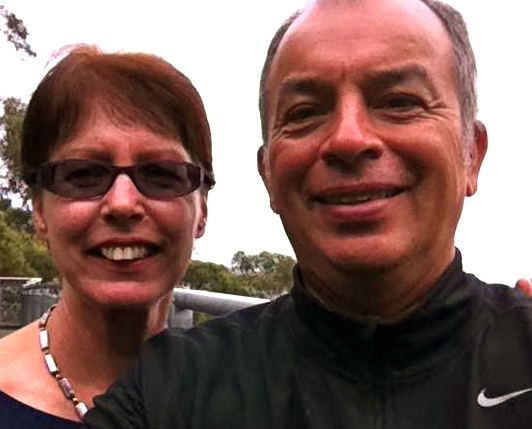
Photo on 2014-03-29 at 18.55 #2My husband and I were empty nesters when we realized that our expectations and needs were no longer being met by the weekly Sunday service. We were newcomers to Europe, having spent 12 years in Korea, but we’d been feeling the same there, too. An idea whose time has come, mixed with the need to become an agent of change, plus the prospect of a long, dark Belgian winter — these are what propelled me in fall 2013 to begin a survey that became a labor of love, and helped me identify what was missing, and what I could do about it.

I set about asking Unificationists in various parts of the world, “What is the format of your service, what inspires you, and what would you change if you could?” I realized quickly that many were also longing for a more authentic spiritual experience. The responses…

View original post 1,344 more words

THE STUDENT WORKSHOP

Image

A LIFE STORY by Nataliya Chesnokova

I am 25 years old, and a PhD student at Russian State University for the Humanities. In Russia, a PhD student should get teaching practice, so since 2012 I have been teaching Korean History and the History of Russian Koreanistics (it has a long and interesting history, by the way!). I cannot say I am talented but I am stubborn, and people often call me “a tank in a skirt.”

Since I started teaching, I wanted my students to participate in conferences and workshops here in Moscow but it turned out to be difficult due to the lack of such activities. I saw enthusiasm in the eyes of my students and felt the necessity of speech practice and scientific communication, so I decided to organize a student workshop by myself. My goal was to organize a Korean studies workshop which could be both useful and comfortable for students to participate in. The ideal workshop in my mind was a combination of an informal meeting along with advice from famous scholars.

At first everything went quite well. Korea Foundation kindly agreed to be our sponsor, and I was very proud of that. But then, when I tried to find out how to print out brochures with the participants’ reports I met the first and hardest obstacle: paperwork… Pfff! I had no clue that I need to write tons of papers in which I ask, explain, insist, undertake and promise. What was the most stressful was that I had no idea where to start or who to ask for help. I felt like a kid standing in the middle of nowhere. Terra incognita, no map, no road, millions of questions without answers – that was the entire luggage I had.

So soon I had to face the situation – no one could help me because organizing a workshop in two months before the actual date seemed to be impossible. But I am a “tank in a skirt” after all, so I did not give up my dream or my goal. By chance I met a woman who answered, “Sure, why not?” to my question, “Is it possible to organize a workshop in two months?” Those two months before the workshop were really stressful. I had to calculate the budget, order meals, book an auditorium, video and sound equipment, draw a picture for a banner and then order the banner, invite guests, make programs, and so on. As my colleagues said, “It was a start from minus one.” Right now I cannot remember every step I had to take. It seems they were all taken together and at once. But certainly, the first thing I had to accomplish was the paperwork.

Believe me, I hate paperwork, and still I had to rewrite tons of documents again and again until every paper was signed and taken. I kept telling myself that I was planning a good thing and it was worth doing all this crazy mess and so I went on. There was no free suitable auditorium on the date I wanted to hold the workshop, so I had to move it to the 25th of May 2013, Saturday. I booked the room and the needed equipment, placed advertisement on different websites, called and emailed Korean studies students and lecturers. As soon as I understood that approximately 40-50 people would take part in the workshop, I ordered meals and booked tables in our university cafeteria. Then I made programs of the workshop and the brochures with the participants’ reports. The woman who had said, “Sure, why not?” helped me to get the programs and brochures done without any cost, along with some souvenirs with the RSUH logo to give to the participants. The hardest part was the banner because I cannot draw at all. If I draw a mouse it looks like a tiger, and a tiger looks like a table. Yes, it is pathetic. Two evenings later I managed to draw something more or less pretty and suitable for the banner. Then I emailed the picture to several companies comparing their prices and finally agreed to order from one of them.

On the 25th of May I was the most nervous person in the whole world. Or at least the most nervous girl in Moscow.

And still it was a success. Not a success to be written in huge letters, but still it was an achievement. There were 16 spokespersons, one open lecture and more than 50 guests from different universities that came to hear the reports. One spokesperson even came from Saint-Petersburg to participate in the workshop! Two of my students also made reports. I was happy enjoying the moment when a new-born baby – the workshop – finally opened its eyes and breathed fresh air. It was alive.

Meals, water and papers – everything was as much as it was needed. My students, friends and colleagues came to help and to listen to the reports too. They helped a lot, and I do not know how I would have been able to control the workshop process without them. But what was even more important was belief. My older and younger colleagues, the Korea Foundation, friends, students and even unknown guests came to support “the First Workshop of the Korean Studies at Russian State University for the Humanities,” as I named it. They believed in me and with this belief I was able to believe in myself as well.

This year, in 2014, I organized the 2nd workshop and it was much easier. Next year I am going to do a workshop for students not only from Moscow and Saint-Petersburg but from Novosibirsk too. Seeing and listening to students speak more and more freely and confidently I am proud both of them and myself. They are able to get a piece of advice from famous lecturers, demonstrate their research, rehearse their speech, and present without any fear. My aim is to make this process comfortable.

If sometimes when I am stressed I think that no one needs what I am doing, I remember the shining eyes of my students who are presenting their papers in front of an audience and who are catching every word that I am saying. It gives me strength.


Unconditional Love in Practice

Enrique2

LIFE STORY by Enrique Ledesma

A few years ago a person from another country was sent to a church centre where I was the director. I was advised that she had some deep emotional difficulties trusting anyone and attacked those who tried to get near her. It was not long before I experienced that first hand, with her outbursts and accusations hurled at me almost daily. I was a bit shocked at first and felt deeply challenged but I was determined to see if I could help her somehow. I had a goal that no matter what, I would not give up on her. Personally, I wanted to see if unconditional love was as powerful as I held it to be and whether I could actually practice it and lose my ego for the sake of someone else.

I prayed for her daily, thanking God for her existence and asked to be a vehicle of love and compassion. I prepared tea and cookies daily and offered them to her though she refused to accept anything from me or even to talk with me. She would speak to me through others in the third person only and usually with insults that no one wanted to translate after a while. After a few months, one day, her angry demeanour, without any explanation, suddenly changed and she smiled and accepted the tea and we sat down for hours talking. As I listened to her struggles growing up, I felt tremendous empathy and respect for her. In counselling it is called transference when someone unconsciously transfers or  projects certain feelings on to you that stem from their early attachment care givers. Positive change can occur when we understand what is happening and can express warmth and care in a loving way, healing and reversing past problems.

THE LIFE STORY PROJECT

LIFE STORY: or how to identify your transferable skills~

S-2 Class
THE ASSIGNMENT:
Think of something you did that was really fun, challenging, adventurous, or difficult. It can be from any time in your life. It can be something very simple, like riding your bike for the first time, or that no one even noticed, like my story below. The key point is that you were fully invested, and you overcame a challenge in order to accomplish your desire. You will need to identify 4 things:

1. The Goal: What was it you wanted to accomplish? “I wanted to…”

2. The Obstacle: What was the challenge you had to face and overcome?

3. The Action Plan: What did you do? Outline the steps you took to eventually accomplish.

4. The Result: What did you learn? And how do you know you were successful?

SAMPLE STORY:

THE TELEPHONE
Ever since my dad made fun of the way I answered the phone, I was fearful and avoided answering it like the plague. By the time I was in college, I knew it was time to put my phone phobia to rest. I wanted to feel comfortable answering the phone in my own house! (Goal)

The challenge was I was still SCARED, and would break into a cold sweat when the phone rang and no one else was home to answer. (Obstacle)

So, I decided to make a strategy to challenge my fear. (Action Plan) I wrote all the possible scenarios that might happen: Someone calling for my parents, someone calling for me, wrong number, etc…and wrote down what I would say in each of those events. “Hello? This is Robin….Sorry, she’s not here right now, can I take a message?” The action steps included jumping up and down when the phone started to ring. I knew enough about energetics to realize this would get me into a more positive space, and also get my voice up off the floor.

Result? I became super good at answering the phone. I found out it was fun, once I got the hang of it. To this day, I enjoy answering the phone, and can handle whatever comes through on the other end of the line. Success!!

Now it’s YOUR turn 🙂 Try thinking of a victory you had, an accomplishment that you’re proud of, and analyze what you did to make it happen. Then write it down and SEND IT!

I’m interested to find out how people challenge difficulties, and what inspires and motivates them to do so. If you contribute a brief story, including your name, age, and where the story took place, I will add it to this blog, and you will have become a contributor-at-large. No pay, but it will be an opportunity to reflect on a life lesson, AND read about other people’s experiences.

You can send your LIFE STORY to projectlifestory@gmail.com, or post it directly in the comment section below. Send me a private FB message when you do, so I don’t miss it. And if you need any help with the editing, let me know~ all my Korean students were grateful for that 🙂 Thank you!

To see the life stories written by my Korean students, see https://teatalksrobin.wordpress.com/category/life-stories-from-korean-students/ or just keep scrolling down. They’re longer than a paragraph because they were prepared for a speech class.

* * *

The LIFE STORY PROJECT is about identifying our unique stories~ reaching into the most important places in your life where you were most alive, most vulnerable, most challenged and most inspired. Richard Nelson Bolles, in his award-winning job-hunters’ Bible, “What Color is Your Parachute?” said that searching for these stories of struggle and success helps us to discover what makes us tick. Hidden between the lines of each of our Life Stories are the keys to our strengths and passions. When faced with something important to us, something that fully absorbed our time and attention, or that posed a significant challenge to us for one reason or another, we found ourselves calling upon our talents and skills to work it out. According to Bolles, finding your life stories is an important way to discover your passion and perfect vocation. He shows us how to take each story apart to discover what skills we used~ what he calls ‘transferable skills,’ meaning they can be used in other areas in our lives. When we use these skills, we are enjoying and expressing our original nature and BEST SELF, so this is what we want to look for in a job or career path.

STAGE FRIGHT

KMU Stage Fright

STAGE FRIGHT, by Seo Jin

“If I ever have to speak in front of many people again, I will never be nervous, thanks to this experience.”

Hello, everyone. My name is Seo Jin. I major in Chinese and Chinese Literature. I’m going to talk about my challenge, stage fright. Every time I had to give a speech in front of many people, I worried about it too much. Once I started my speech, I froze up and completely forgot what I was going to talk about. I couldn’t speak clearly and my hands shook because I felt so nervous. As my nervousness grew, my speech got worse and worse. Finally, I finished my speech almost crying. After it was over, I always regretted that I didn’t feel more comfortable or have more confidence. I thought it was a big problem, not only at that time, but also for my whole life. That’s why I decided to overcome my challenge, and I started to practice speaking in front of people.

What did I do to overcome my fear of public speaking? First, I started talking with my dolls and the wall. I regarded my dolls as an audience and I talked in front of them. I even talked with the fish in the aquarium. I know it sounds ridiculous, but I really did that. Secondly, I tried to answer the teacher’s questions as much as I could during class. That gave me more confidence.

Now, it’s so much better than before. I can speak in front of people without my hands shaking and I don’t feel nearly as nervous as before. I can’t say that I’ve completely overcome my fear of public speaking, because I still feel nervous sometimes, but I’m on my way. I believe that one day I will be able to speak easily in front of thousands of people.
The End

Teacher’s Comments: The LIFE STORY PROJECT was first conceived during a writing assignment by students at Kookmin University in Seoul, Korea.The stories were eventually given as short 2-3 minute speeches in front of the class.

In my job as a teacher of English conversation at Kookmin University, I was constantly faced with students who were in the process of job interviews and resumes and the daunting task of selling themselves in a very competitive job market. I realized that many of them didn’t really know themselves well, and that finding their stories as Nelson Bolles suggested in his bestselling job-hunting book, “What Color is Your Parachute?” would help them discover their strengths and interests.

The assignment I gave them was to write a story from their life about a time that they 1) wanted to do something, 2) faced an obstacle, and 3) overcame it. In the process, they were reminded of interests and strengths that they have, and the rest of us were inspired to hear their accomplishments. The LIFE STORY PROJECT was born! To submit a story, please keep it brief, include your name, age, and where the story happened, and send it to projectlifestory@gmail.com.

Thank you! Robin