My survey has finally been published in the Applied Unificationism Blog. Comments of course are welcome! To see it on the AU blog, click the link below. There are many other interesting articles there as well.
My husband and I were empty nesters when we realized that our expectations and needs were no longer being met by the weekly Sunday service. We were newcomers to Europe, having spent 12 years in Korea, but we’d been feeling the same there, too. An idea whose time has come, mixed with the need to become an agent of change, plus the prospect of a long, dark Belgian winter — these are what propelled me in fall 2013 to begin a survey that became a labor of love, and helped me identify what was missing, and what I could do about it.
I set about asking Unificationists in various parts of the world, “What is the format of your service, what inspires you, and what would you change if you could?” I realized quickly that many were also longing for a more authentic spiritual experience. The responses…
This morning I had a long talk about life with my 91 year old neighbor Denise. She asked me what I was writing in my notebook. I had written, “I’ve got to remove my expectations. It makes people feel bad,” but I wasn’t sure how to say that in French, so I said, “Je veut me changer.” I want to change myself.
She was intrigued and said, “Let’s take a walk in the park, and after I show you my favorite places, we’ll sit and you can explain what you mean.” Of course, she said that in French, but I’m not going to try writing it all out here now. There would be far too many spelling mistakes, and it would only be more confusing.
After showing me the Sequoia at the edge of the park, and pointing out each of the particular trees and flowers that were most beautiful to her, we chose a bench in the sun and got down to the work of a philosophical conversation. It took quite a long time, as many of the words she used had to be explained and then examined in context, and neither of us had brought a dictionary, but I will give you a summary of the main points:
1) everyone has something good and bad.
2) Me too~ I have something good and bad;
3) Appreciate the good in people and ignore the rest if possible;
At this point I told her that in my life I had always been searching for the perfect person.
“Ca n’existe pas!” she said firmly, and we both laughed.
This brings me to her next point:
4) Perfection can be found in ART, but in life we have to learn to accept things as they are.
Then she wrote down the word, ‘Resignation,’ and I threw up my hands and exclaimed, “NO! I don’t believe that’s the way!”
Maybe in French the word has a different meaning, but in English to resign oneself to something has quite a negative connotation, and it’s not the way I want to live my life. I explained to her the difference between resignation and ‘serenity and acceptance.’ She said she would think about that, and then took my pen and wrote ‘espoir’ – ‘desespoir’ and that somewhere in the middle is reality. Which led us to the next point:
5) In between hope and despair is serenity and acceptance;
Then she wrote ‘exigeante’ and under it, ‘concession.’ I thought I understood. Then she wrote the word ‘decu’~ (I don’t have a French keyboard so I can’t put the little tail on the c)~ and ‘deception amoureux.’ Was it self-pity? discouragement? I didn’t know until I got home and my husband explained that it means ‘disappointed.’ Ahhh! of course~’disappointed in love.’ The next point:
6) We need to make concessions, and temper our demands of others, or we will always be disappointed.
Do you like these kinds of conversations, I asked. “Oh, j’adore!” she said, and added that it’s not easy to find people to have them with. At that point she smiled and told me that I looked like I was getting tired. I laughed and answered, “Oui! Je suis remplis.” Jean told me later that I should have said, “J’en avais assez,” but she understood
I took out my camera, and got a selfie of the two of us, and then some pictures of the beautiful park and especially the grand sequoia as we strolled home. She commented that I see the beauty and good in trees, but I need to learn to see it in people, too.
“Tu as raison,” je lui ai dit. (You’re right! I said.) We walked back home arm in arm, and she tried to say something else to me, but I could not understand. “Come inside, and I’ll get the dictionary.”
The idioms she was using were, ‘Faire la part de feu,’ to cut one’s losses, and ‘Faire la part des choses’~ to put things in perspective, our final point:
7) When we make a mistake, or lose something we wanted to keep, we have to cut our losses, and put things in perspective. Yes, I sighed. I’m learning….
We were both pretty exhausted. For one, the conversation had taken place basically in French, and two, we both have a limit to how much we can handle of that sort of thing! Round two next week A bientot!
The following is an inspiring and thoughtful reflection / guide for young people considering getting married. It was written by a young friend of mine, and I am re-blogging it here for others to enjoy.
Hi everyone! My name is Lara Voelker and I was blessed this February to Jacob Shaw. We were both 23 when we were matched. I say “matched” somewhat loosely – it was more of a mutual decision. It’s actually a very cute story and maybe I’ll share it another time. For this article, I’d like to share seven reasons I’m glad I waited until my mid-twenties to get into a serious relationship. These seven points are simply my own reasons for waiting – they do not invalidate functional, happy relationships that were started at a much younger age than mine. However, my hope is that those of you considering the matching will think seriously about the commitment and effort it takes, and honestly reflect about whether you really are ready.
1. My brain had time to develop.
There’s a physical reason teenagers are unreasonable, moody…
This video is one I’m glad I didn’t miss. Thank you to Lina for sending me the link and reminding me how much I’ve always admired Oprah Winfrey. One of the things that make her so special and so popular throughout the world is her willingness to be authentic. When she discloses the struggles of her own life, she provides a window into her heart and invites others to do the same with theirs. Talk show hosts typically stay on a superficial level with their guests and you never really get to know them. Oprah opened up a world of real life problems and she was never afraid to ask the difficult questions. On this video, you’ll see her pull up her pant leg and show us how she cuts the foot of her pantyhose off so she can wear sandals AND support hose at the same time. Who would do that?? Those are the secrets we usually don’t share publicly. We put on the front, and hope it passes. Disarming. Nice. Funny. And most of all, it’s a statement that we’re OK, even with our little hidden quirks. We don’t even need to hide them anymore, because it’s likely that everyone else is doing the same!
For those who appreciate having things written down (like I do), here are some excerpts taken from the video. They are the key points and the takeaways for me.
OPRAH: “I was a poor colored girl, but I held onto my belief that there was something bigger and greater for me. At different times in your life, the call will be different. I knew that whatever that right thing was, it wasn’t gonna be what everybody told me it was.
The only way to know what to do in life is to pay attention to the life that you are living right now. You can’t get it by listening to other people. The purest light of yourself, your own conscience~ that’s how the energy of God speaks to all of us. Knowing that you deserve and are worthy of the best that creation has to offer, and believing that there is a reason why you are here, and understanding that your job is to figure out what that is and then follow that belief. In life, everybody is a teacher for you. If you’re in a bad relationship right now, you’re a student of how to have a better relationship.”
Jim Carrey: “I would visualize directors being interested in me, saying ‘I like your work.’ I would visualize things coming to me that I wanted. I had nothing at that time, but it just mad me feel better. I wrote myself a check for 10 million dollars for acting services rendered, and I gave myself 3 years, dated for Thanksgiving, 1995, and put it in my wallet. Three days before that date, I got paid 10 million dollars for Dumb and Dumber.”
OPRAH: “If you can see it and believe it, it’s a lot easier to achieve it. Time, effort, and energy that you put into a thing. You become what you believe. To find your purpose, pay attention to the life you are leading now. You don’t become what you want. Most of the time in life you don’t even get what you want.
I remember listening to the Bible stories in church as a child. I believed that ‘through God all things are possible.’ Jesus was talking about having the faith of a mustard seed. Have you ever seen how tiny a mustard seed is?
Do you believe you are worthy of happiness? Do you believe that happiness, success, abundance, comfort, fulfillment, peace, joy, and love is a part of your birthright? Because you will manifest the life that you believe. People who are most successful and who can handle that success~ it fulfills them and doesn’t overwhelm them~ are the people who have that belief.
I talk for a living. But I knew JK Rowling and I had something in common, even though she’s a writer. JK Rowling is the first self-made billionaire author ~ selling over 400 million books in 69 languages and 200 countries. She said, “The voice in my head said, ‘The difficult thing will be to get published. If it’s published, it’ll be huge.’ I wasn’t the world’s most secure person. The one thing in my life that I believed is that I can tell a story.”
OPRAH: “That manuscript was turned down by many many people, but she wouldn’t stop believing. She was a writer, and she knew she was a writer, and what writers do is write. They write whether 15 people or 15 million people are reading it. If that is what you believe you were born to do, you do it~ you find a way to allow the truth of yourself to express itself. We’re all looking for the highest, fullest expression of ourselves as human beings, and unless you’re doing that, you are not living your fullest life.
You are worthy of happiness, love and peace. Believe it. Believe cannot come from your ego self. Many beliefs have been formed by people’s or society’s definition of what you should become. There’s a heart calling on everybody. Your heart calling is only YOURS, and can only be expressed by what YOU have to offer the planet.”
Sara Blakely and SPANX ~ “All the men I was cold-calling said this isn’t a good idea, no one’s going to buy it~ but I believed in it, and it has just taken off. The journey has been amazing.”
Ralph Lauren: “I had a passion. I love working. I love teams. I love the challenge of doing things that haven’t been done. I went into stores and couldn’t find what I wanted, so I made it.”
OPRAH: “They didn’t give up on their belief. Once you know what you believe, hold on to that belief and don’t allow yourself to be compromised in any way. As we are evolving into becoming the fullest expression of who you were meant to be, it’s really important to know what you believe about yourself. You are where you are in your life based upon what you believe. It’s not what you think you believe on the surface. It’s also the shadow beliefs that are holding you back. If you’re not looking at those subconscious tapes running through your mind telling you you’re not good enough, worthy or smart enough~ if you’re not conscious of that~ then you end up acting out of that belief system.
Jim Carrey started to act as thought he already had what he wanted. Your actions have to be in alignment with what you say you believe. The choices you have made have been because of what you have believed to be true for yourself. When you begin to open yourself up to the real world, the reason you’re here is for the contribution that you have to offer, and your real job is to figure that out!”
Collaborating for a Change: Applying Himmelman’s Approach
Source: Arthur T. Himmelman, Collaborating for a Change
-Networking- Information exchange, Minimal time, low levels of trust, no turf sharing; No mutual sharing of resources
-Coordinating-Information exchange and activities to achieve a common purpose, Moderate time and trust, no turf sharing, make services user friendly; None or minimal resource sharing
-Cooperating-All of coordinating plus resource, Substantial time, high trust, high access to each other’s turf; Moderate to extensive resource sharing. Some sharing of risks, responsibilities and rewards.
-Collaborating-All of cooperating plus enhancing the capacity of another to achieve a common purpose; Extensive time, very high trust, reciprocal capacity enhancements; Full sharing of resources, risks, responsibilities and rewards
Additional Resources
-David Chrislip and Carl E. Larson: Collaborative Leadership
-WilliamIsaacs: DialogicLeadership
-James Kouzes and Barry Posner: The Leadership Challenge
-ArthurT.Himmelman: CollaborationforaChange
-JohnKesler: CivilDiscourse
-PeterSenge: TheFifthDiscipline
-JohnGardner: OnLeadership
-Ronald Heifetz: Leadership Without Easy Answers
Margaret O. Schmelzer, MS, RN State Health Plan Director Director of Public Health Nursing and Health Policy Division of Public Health Wisconsin Department of Health Services Madison, Wisconsin
Five Levels of Discourse in Building Healthy Communities
(Adapted) Primary source: John T. Kesler, Healthy Communities and Civil Discourse
1. Influence and even control decisions by individuals, institutions, and interest groups. Used to getting what they want due to power, money and influence (e.g., government, powerful industries, Wall Street).
2. Here we take responsibility for respecting other’s rights if we are to enjoy our own. Gets us no further than balancing and accommodating interests. Doesn’t lead us to maximizing personal or community health. This can result in confrontations and win-lose outcomes (e.g., dispute resolution, such as mediation, arbitration).
3. Calls for a higher cognitive and moral awareness and a deep sense of empathy. Works well with homogeneous ethnic and socioeconomic groups (town meetings). Focus is on responsibility and ownership / accountability. Here priorities, policies, plans are developed consistent with values conducive to personal and community flourishing. By participating, people begin to own it and work together (e.g., healthy communities initiatives, HW2020).
4. Includes voices not usually heard. Level 3 is good but insufficient as it’s too easy to be satisfied with priorities and may not consider the entire community. Address fairness, social justice, universal respect and public policy. Look beyond the issues and solutions that arise out of discourse / dialogue. Finding commonalities can bridge deep cultural differences, and can yield policy implications that are broader than the scope of the initiating community (e.g., housing, homelessness, education).
5. Extends concern for justice and fairness for each individual without giving up principles of fairness and social justice. Reflects The Golden Rule. Provides the opportunity to promote the highest traditions of a caring and nurturing society (e.g., voting, civil rights, human rights).


 My husband and I were empty nesters when we realized that our expectations and needs were no longer being met by the weekly Sunday service. We were newcomers to Europe, having spent 12 years in Korea, but we’d been feeling the same there, too. An idea whose time has come, mixed with the need to become an agent of change, plus the prospect of a long, dark Belgian winter — these are what propelled me in fall 2013 to begin a survey that became a labor of love, and helped me identify what was missing, and what I could do about it.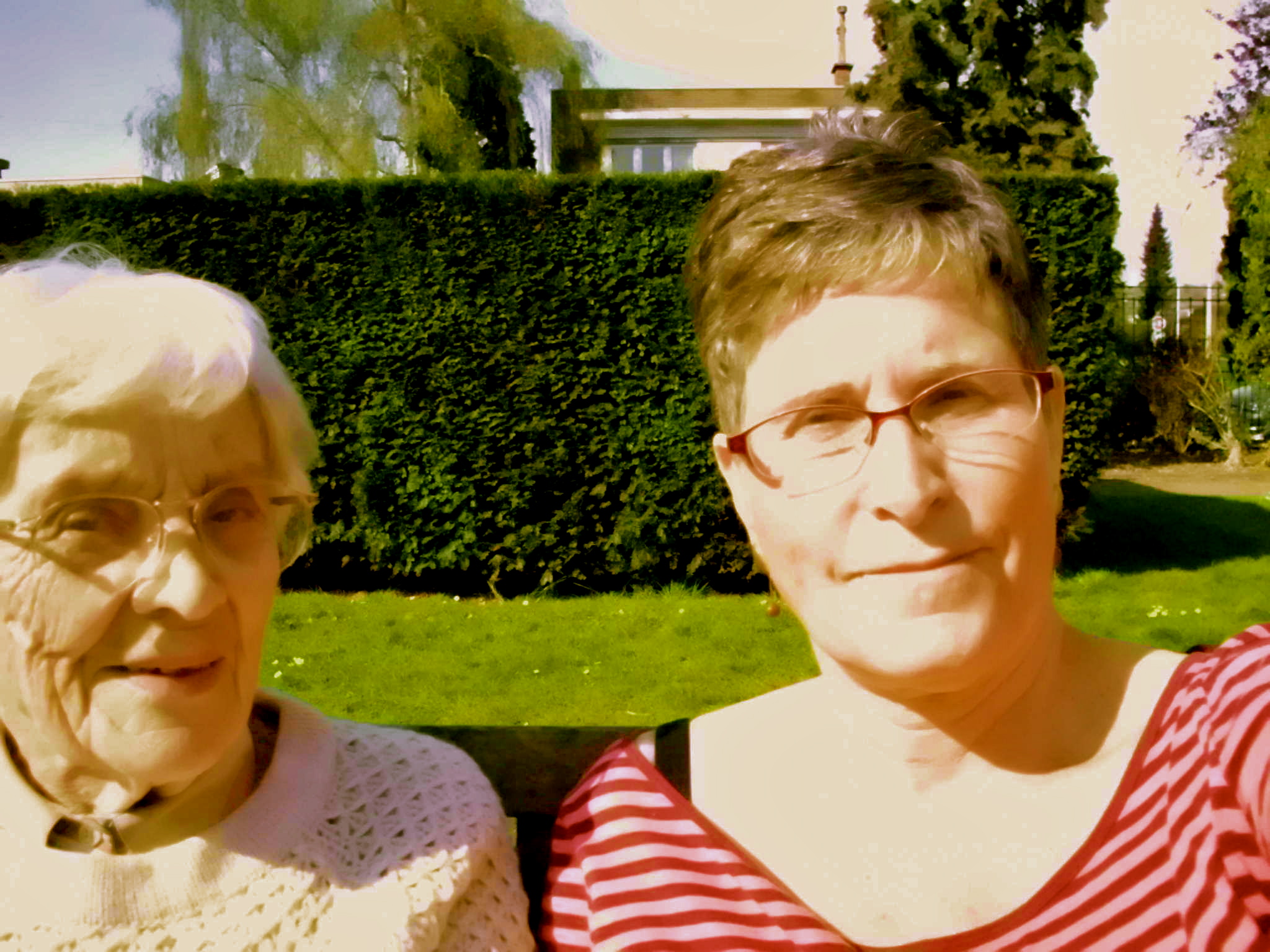




 TEA TALKS with ROBIN